
Many small and growing businesses keep their accounts updated and file their returns on time. Yet when the stakes are bigger, such as how much to invest, how to manage cash, or whether the business is truly making a profit, there is often no one to turn to. A virtual CFO can fill this gap.
Read More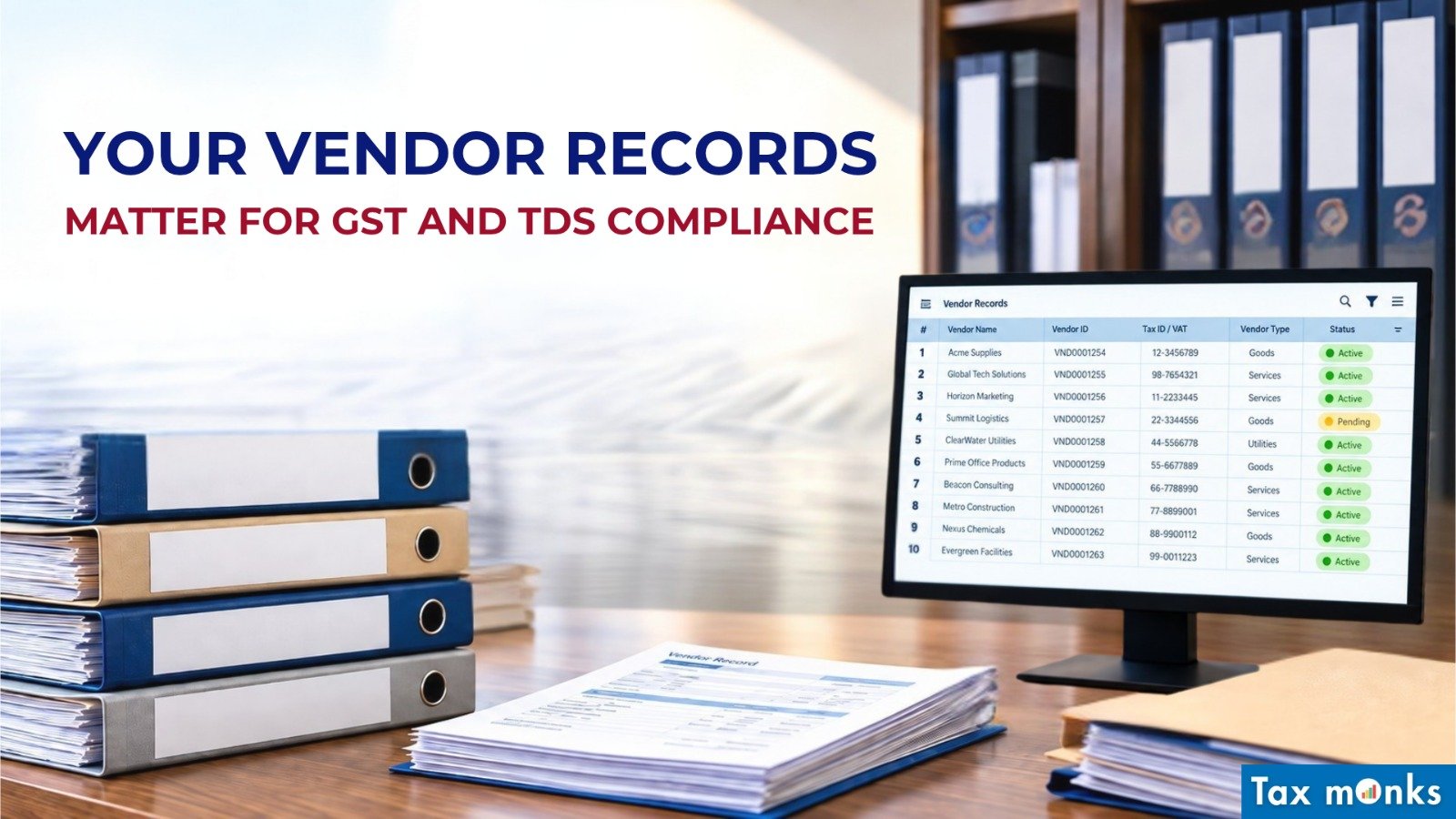
Most businesses pay attention to vendor data only after something goes wrong. A GST notice arrives, a payment reaches the wrong account, or an auditor asks for a reconciliation. Yet vendor master data affects every invoice, payment, and tax return. Accurate records support reliable books, timely filings, and healthy supplier relationships.
Read More
You have a business idea, a clear plan, and the confidence to begin. Before you start operations, there is one important step you should not skip: incorporating your company. Choosing the right type of business entity and completing the process correctly can save you from legal and money problems later. Incorporating a company involves legal steps, documents, and compliance rules. When you understand these steps in advance, you save time, avoid delays, and reduce the risk of future challenges.
Read More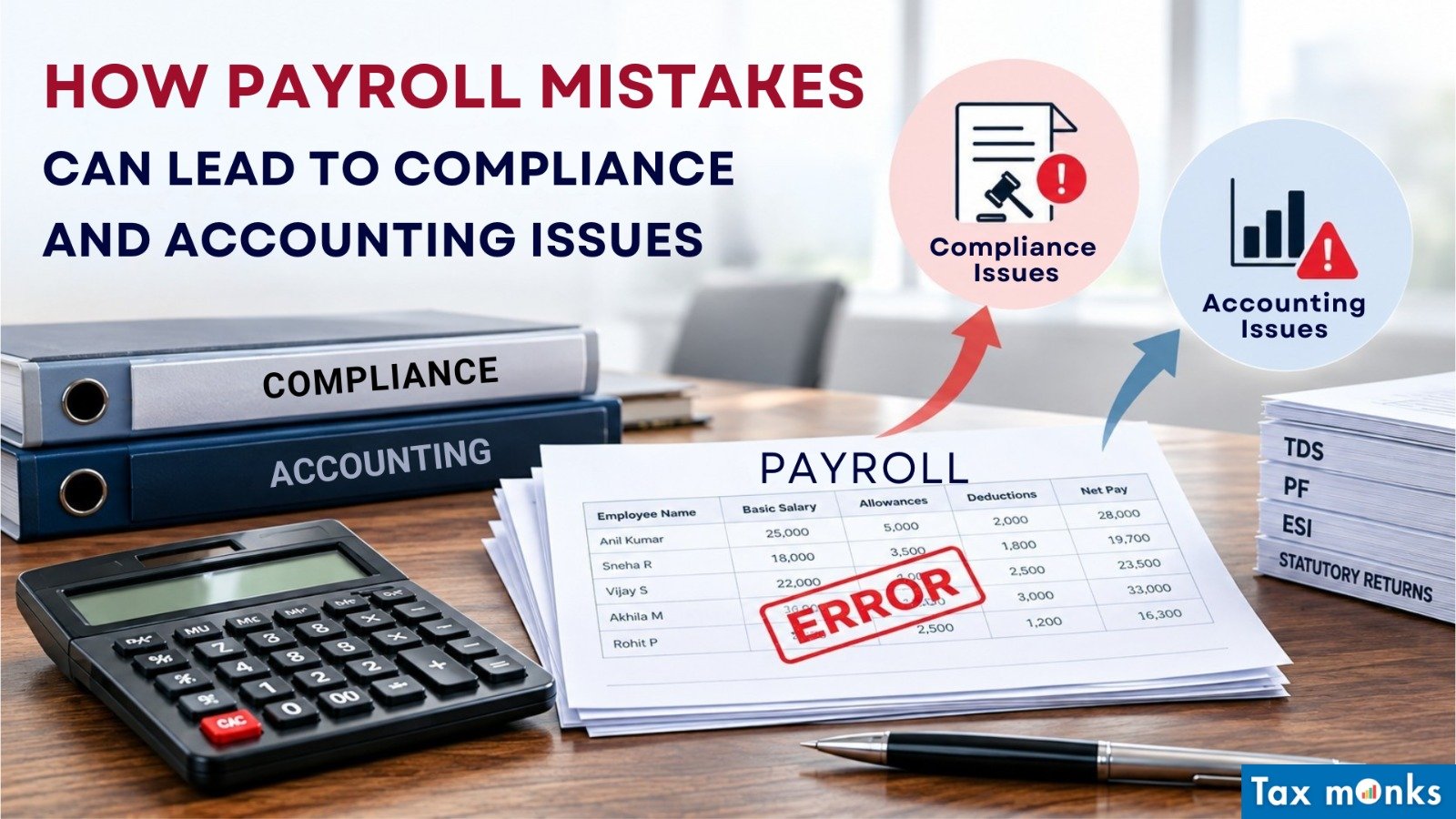
Every business, regardless of size, depends on payroll being accurate and timely; employees expect it, and regulators require it. But because payroll follows a fixed monthly cycle, it is often treated as routine rather than as a function that carries real compliance weight. This is exactly where risk tends to build up unnoticed. As employee numbers grow and salary structures become more varied, payroll errors become more likely, and their consequences become harder to reverse. Understanding where these mistakes typically originate can help businesses prevent penalties, correct issues early, and maintain accurate financial records.
Read More
Reaching the halfway point of the financial year is a good time to pause and review how your business is performing. Many companies focus their accounting efforts only at the year-end, but checking in now can reveal issues early, before they turn into bigger problems. Reviewing your books at the half-way stage gives you the chance to correct course, plan better for the months ahead, and enter the final stretch of the year with a clearer financial picture.
Read More
Business growth brings new customers, higher transaction volumes, larger teams, and more complex financial activities. These changes are signs of progress, but they also place greater pressure on accounting systems and internal controls that may have been designed for a smaller, simpler operation. Identifying potential audit challenges early can improve financial accuracy, strengthen compliance, and make the audit process more efficient. Below are five areas that growing businesses often overlook until an audit brings them to the surface.
Read More
Income, investments, expenses, and business activity all affect how much tax you owe over the year. For individuals, looking at total earnings alongside available tax benefits helps improve overall financial health. For businesses, keeping track of expenses, capital spending, cash flow, and regulatory requirements keeps operations stable. Reviewing these areas regularly helps taxpayers meet deadlines, stay compliant, and avoid paying more tax than needed.
Read More
Accurate accounting records help businesses understand their financial position and make informed decisions. However, there are situations where a transaction cannot be immediately recorded under the correct account because complete information is not available. In such cases, the general practice is to place the transaction temporarily in a suspense account.
Read More
Running a company involves several statutory and administrative responsibilities. Secretarial compliance ensures that corporate records are properly maintained, statutory filings are completed on time, and legal requirements are met. Errors or delays in these areas can lead to penalties and create difficulties during audits, investments, restructuring, or other corporate transactions. Understanding common compliance mistakes can help companies maintain proper records and avoid regulatory complications.
Read More
Managing GST compliance effectively helps businesses maintain smooth financial and tax operations. However, errors such as delayed return filing, incorrect tax details, mismatched records, or improper Input Tax Credit (ITC) claims can lead to notices from GST authorities. Understanding the common reasons behind these notices can help businesses identify potential issues early and maintain better compliance.
Read More
Businesses handle numerous financial transactions, including customer payments, supplier settlements, fund transfers, and bank charges. When these activities are not properly recorded, even small differences can affect cash flow, financial reporting, and tax compliance. Regular bank reconciliation helps businesses compare their accounting records with bank statements. This process identifies differences between the two and allows them to be reviewed and corrected before they create larger financial issues.
Read More
Filing your Company Income Tax Return (ITR) on time is an important responsibility for every business. If your company earned income during the Financial Year (FY) 2025-26 and is subject to a tax audit, you must file your return for Assessment Year (AY) 2026-27 by 31 October 2026. Filing your return on time helps your company stay compliant with tax laws. It also helps you avoid penalties, interest, and unnecessary notices from the Income Tax Department. A timely filed return also improves your company's financial credibility when applying for loans or working with banks and investors.
Read More
A successful business depends on informed financial decisions. One of the most important financial reports that supports these decisions is the Income statement, also known as the Profit and Loss (P&L) Statement. It provides a summary of a company's revenues, expenses, and profits over a specific period, helping business owners understand whether the business is making money or losing money.
Read More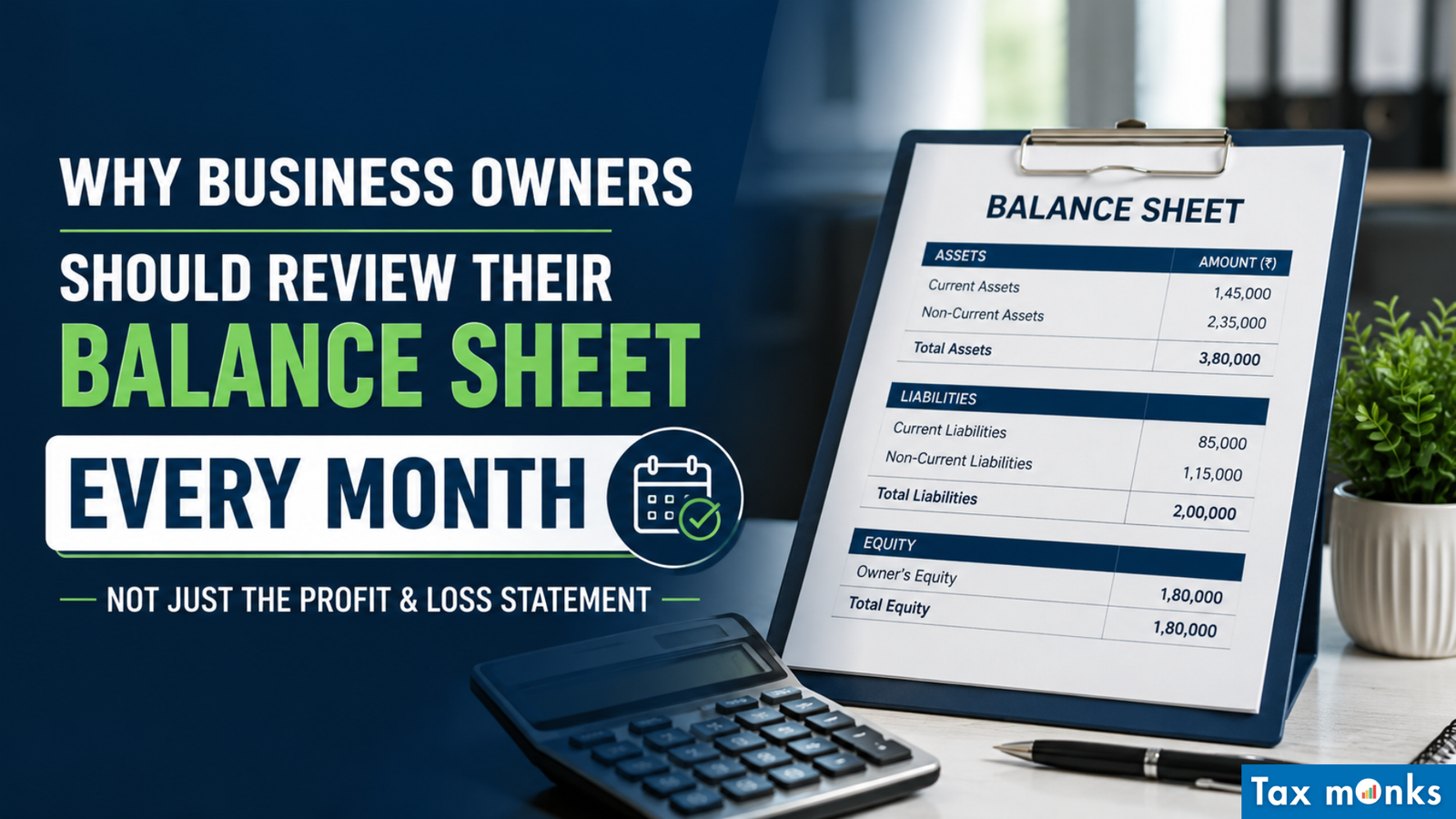
Many business owners regularly check their Profit and Loss (P&L) Statement to see whether the business is making money. While this report is important, it does not provide the complete financial picture. A business can report healthy profits but still experience cash shortages, increasing debts, or financial risks. This is why reviewing the Balance Sheet periodically is equally important.
Read More
Many business owners still believe an accountant's primary role is to record transactions, prepare financial statements, and ensure statutory compliance. While these responsibilities remain important, modern businesses require much more than accurate bookkeeping. An accountant should be a trusted financial partner who helps business owners understand their numbers, identify opportunities, and make informed decisions that support long-term growth.
Read More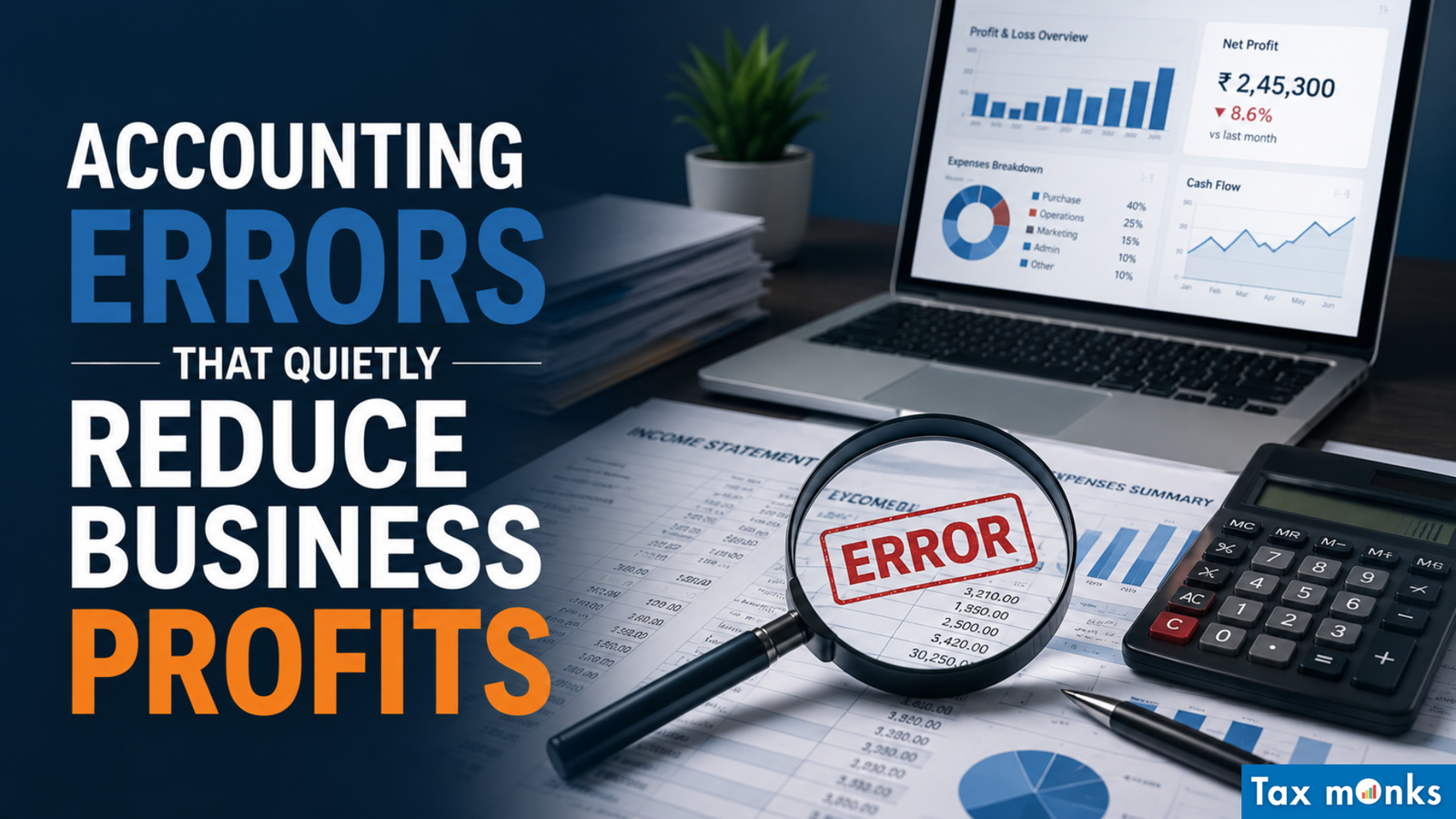
Many businesses concentrate on increasing sales and controlling major expenses but overlook small accounting errors that gradually reduce profitability. These mistakes often remain unnoticed because they occur during routine financial processes. Over time, they can affect cash flow, distort financial reports, and lead to poor business decisions. Identifying and correcting these errors is essential for maintaining a healthy and profitable business.
Read More
As a business owner, your focus is always on increasing sales, attracting customers, and improving profitability. While these goals are essential, many overlook a critical factor that supports long-term success - internal financial control.
Read More
Many business owners focus heavily on increasing sales and acquiring new customers. While growth is important, the ability to manage day-to-day finances is what keeps a business running smoothly. An important yet often overlooked aspect of financial management is working capital. Working capital refers to the funds available to manage daily operations after accounting for short-term obligations. It directly affects a company's ability to pay suppliers, meet payroll commitments, maintain inventory, and handle unexpected expenses. Reviewing it regularly can help businesses avoid financial stress and make better decisions.
Read More
Many businesses believe that higher sales automatically mean better financial health. In reality, several businesses experience financial pressure even when sales are increasing. Strong revenue may look positive from the outside, but poor financial management can still create serious challenges inside the business.
Read More
Every business has to go through difficult periods at some point of time. Market slowdowns, rising expenses, delayed payments, or unexpected challenges can create pressure on daily operations. During such situations, businesses with strong financial habits are usually better prepared to handle uncertainty. Small and consistent financial practices can make a major difference in maintaining stability and protecting long term growth.
Read More
Many business owners focus mainly on sales, revenue, and accounts while reviewing business performance. However, one important financial factor that quietly supports better financial planning is depreciation. Though it is often seen only as an accounting term, depreciation actually helps businesses understand asset value, plan capital investments, manage profits accurately, and plan future growth more effectively.
Read More
In business, the timing of a decision can be as important as the decision itself. Many business owners delay financial decisions thinking they need more clarity or better conditions. In reality, waiting too long often leads to hidden losses. Strong financial management depends on taking timely action with the information available.
Read More
Growth is often seen as the ultimate goal for any business. More sales, more customers, and more expansion sound like clear signs of success. But many businesses realise that as they grow, challenges also increase. What once felt manageable becomes complex, and without the right systems in place, growth can create pressure instead of progress.
Read More
Growth is a goal for every business. Expanding to new markets, adding products, hiring new employees increasing capacity feels like progress. But in reality, many businesses struggle during this stage. Expansion brings new challenges, and without proper planning, it can create pressure instead of results.
Read More
In the early stages, many small businesses manage accounts using manual forms, sheets, Excel or simple tools. This works when transactions are limited and easy to track. But as the business grows and volume increases, this method slowly becomes difficult to manage. Data gets scattered, errors increase, and important financial details are not easily visible. Shifting to a professional accounting system at the right time help maintain better control, improves accuracy, and supports business growth.
Read More
Many business owners feel proud about their turnover acheivements. It often is the measure of growth and success. While turnover is important, it does not give a complete picture of a company’s financial health. To understand whether a business is truly performing well, it is necessary to clearly understand the difference between turnover and profit.
Read More
Today, financial transparency has become an important part of tax compliance in India. The tax system is now more technology-driven, and financial transactions are increasingly recorded and monitored through integrated reporting systems. Because of this, individuals, professionals, and businesses must maintain clear and accurate financial records to ensure proper tax filing.
Read More
Tax Deducted at Source, commonly known as TDS, is often handled as a routine monthly requirement. The usual focus stays on deducting tax, depositing it on time, and filing returns. When TDS is seen only through this narrow lens, its real purpose is missed. TDS plays a much larger role in controlling business payments and strengthening compliance discipline.
Read More
Many businesses face GST problems not because of wrong tax rates or missed filings, but due to incomplete or incorrect data. Small gaps in GST data may seem harmless at first, but over time they create serious accounting and compliance issues.
Read More
Salary structuring is one of the most important but confusing areas for many businesses. A proper salary structure ensures employee satisfaction, statutory compliance, and better cost control. When salary, PF, and TDS are not structured correctly, businesses face payroll errors, compliance issues, and unnecessary tax outflow.
Read More
Many businesses pay attention to cash flow only when there is a problem. Payments are delayed, bank balance drops, or expenses pile up. At that stage, decisions are rushed and stressful. In reality, cash flow works best when it is reviewed regularly, not handled as an emergency.
Read More
Many business owners believe that once their accounts are updated, the responsibility of financial management is complete. Sales figures are posted, expenses are recorded, and returns are filed on time. While this is important, it is only one part of the picture. Maintaining accounts and managing finance are often confused, but they serve very different purposes in a business. Understanding this difference is essential for financial stability and long-term growth.
Read More
Profit on paper does not always translate into comfort in daily operations. Salaries still feel heavy, vendor payments feel rushed, and bank balances never seem relaxed. This creates a constant sense of pressure, even when the business is profitable.
Read More
Uncontrolled expenses are one of the most common reasons cash flow becomes tight, even when sales are steady. When spending is not tracked in a structured manner, small leakages go unnoticed and slowly affect the financial stability of the business.
Read More
Many businesses work hard, generate sales, and still struggle with profits. In most cases, the problem is not lack of effort or demand. It is the lack of clear financial visibility. When businesses operate without proper MIS reporting, money is often lost silently without anyone noticing.
Read More
Many businesses struggle with accounting not because of lack of effort, but because there is no proper structure. Missing formats, incomplete records, and irregular checks slowly create confusion in accounts. Over time, this leads to errors, compliance issues, and poor financial visibility.
Read More
GST notices are a common worry for many businesses. In most cases, these notices are not issued because of tax evasion, but due to missing, incorrect, or inconsistent documentation. Even when GST returns are filed on time, weak documentation can trigger queries, mismatches, and scrutiny from the department.
Read More
Many individuals and businesses treat tax filing as only a compliance requirement and keep it off until the last-minute task. Returns are filed just to meet deadlines, often without proper review. While this may seem harmless, late filings and wrong returns can slowly weaken your financial health. These issues do not always show immediate impact, but over time they create financial losses, stress, and compliance risks that are hard to reverse
Read More
TDS compliance is one of the most important yet commonly mishandled areas of business accounting. Even when business owners try to follow the rules, small mistakes in TDS deduction, payment, or reporting can lead to interest, penalties, and notices from the Income Tax Department. In most cases, these problems occur not because of negligence, but due to lack of clarity, poor tracking, or absence of professional review.
Read More
Payroll may look like a routine monthly activity, but in reality, it is one of the most sensitive and compliance-heavy areas of accounting. Salary payments involve attendance validation, overtime, incentives, statutory deductions like PF, ESI, TDS, and correct accounting entries. When payroll is processed without proper reconciliation and professional supervision, minor errors slowly turn into major compliance and financial risks.
Read More
Many small businesses in Kerala still manage their accounts using basic bookkeeping, manual files, or simple invoice entries. This works for a short time, but as the business grows, accounting becomes more complex. GST filings, TDS returns, vendor payments, bank reconciliations, sales records, and payroll need a proper system - not just a notebook or a basic accountant.
Read More
Many business owners believe that once a company becomes profitable, financial stability is guaranteed. But in reality, several profitable businesses shut down every year not because they lack sales or customers, but because they run out of cash. This reveals an important truth: revenues and cash flow are not the same. While profit indicates long-term success, cash flow determines survival in the present.
Read More
Every business aims to grow, improve profits, and make confident decisions. But growth becomes uncertain when financial clarity is missing.
Read More
Managing a Business Is Hard - Accounting Makes It Harder
Read More